
HD Liposuction
What is liposculpture?
Liposculpture is composed of two surgical processes:
- Liposuction allows the removal of fat deposits from the body
- Lipoinjection allows adding fat volume to areas where it is lacking or where we want to add volume.
Plastic surgeons consider fat to be the body’s liquid gold. Liposculpture aims to shape the body’s contour through liposuction and lipoinjection.
- Liposuction: Aspiration of fat using fine cannulas (less than 5 mm in diameter) inserted through incisions of less than 3 mm in the skin.
- Lipoinjection: Using this fat to be injected into the areas where we perceive a volume defect.
Fat injection is used for both cosmetic and reconstructive surgery:
- Cosmetic surgery
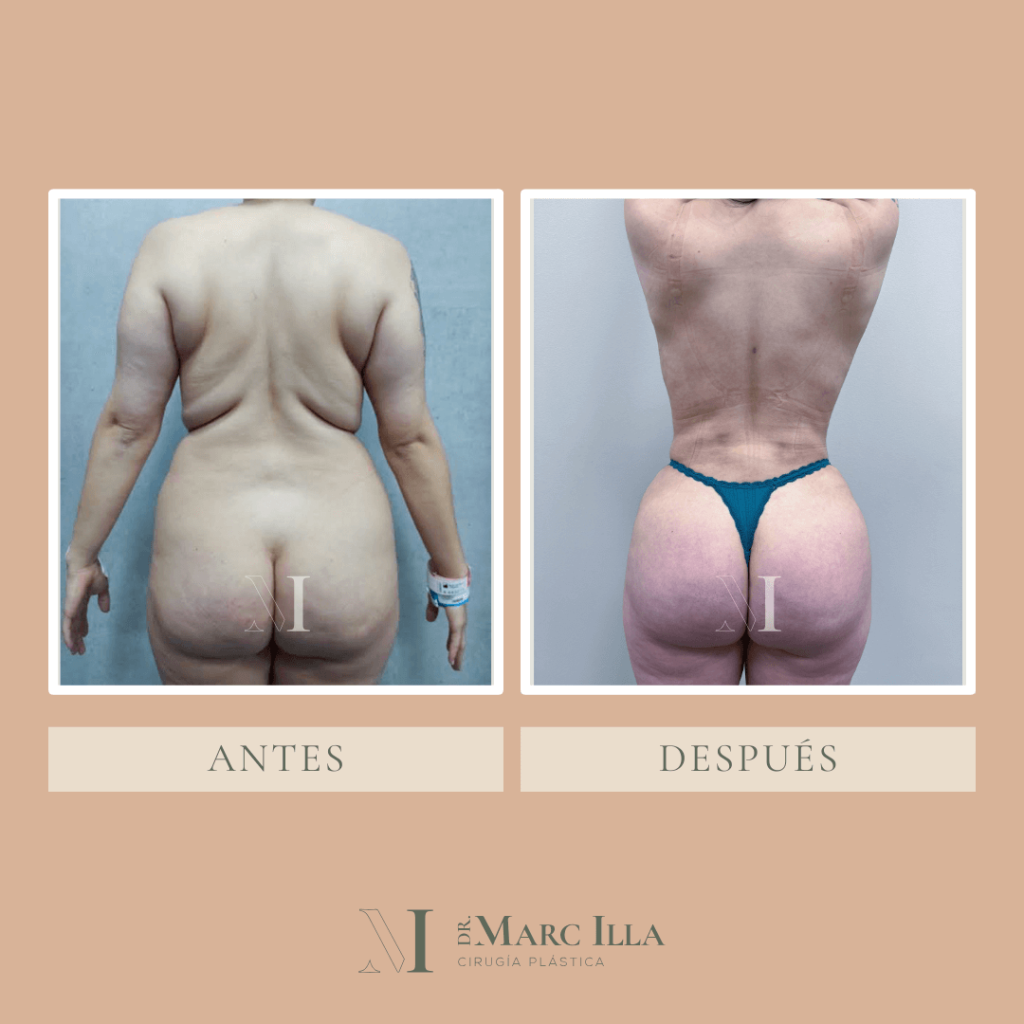
It is usually requested to eliminate stubborn fat deposits, achieve body symmetry, mark the lines that naturally exist in our body and enhance its beauty. It also allows us to achieve a discreet and natural breast enlargement, correct breast asymmetries, naturally increase the volume of the buttocks and counteract the effects of aging and facial atrophy.
- Reconstructive surgery
It is also useful for correcting volume defects that cause deformities, such as those resulting from facial trauma or the removal of a breast tumor. It is also widely used in tissues burned by radiotherapy and in scars to improve their texture.
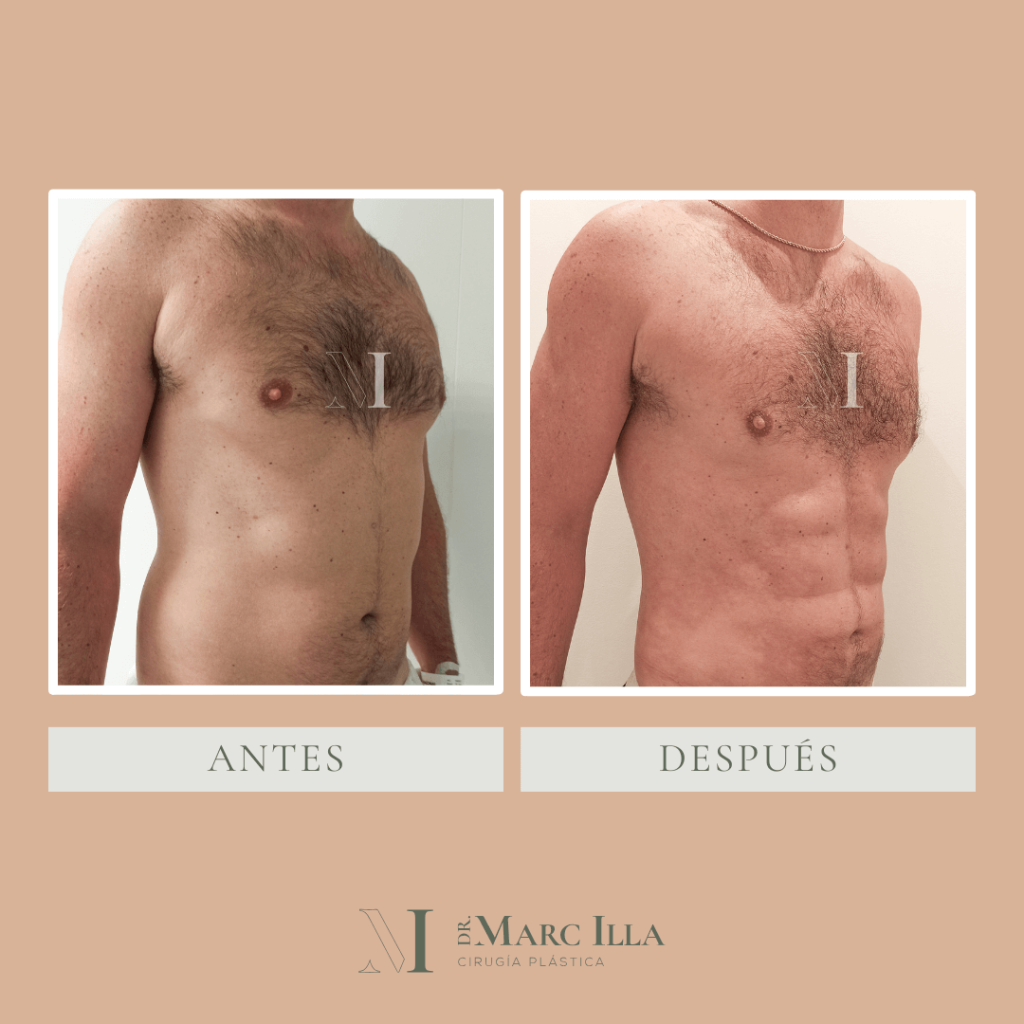
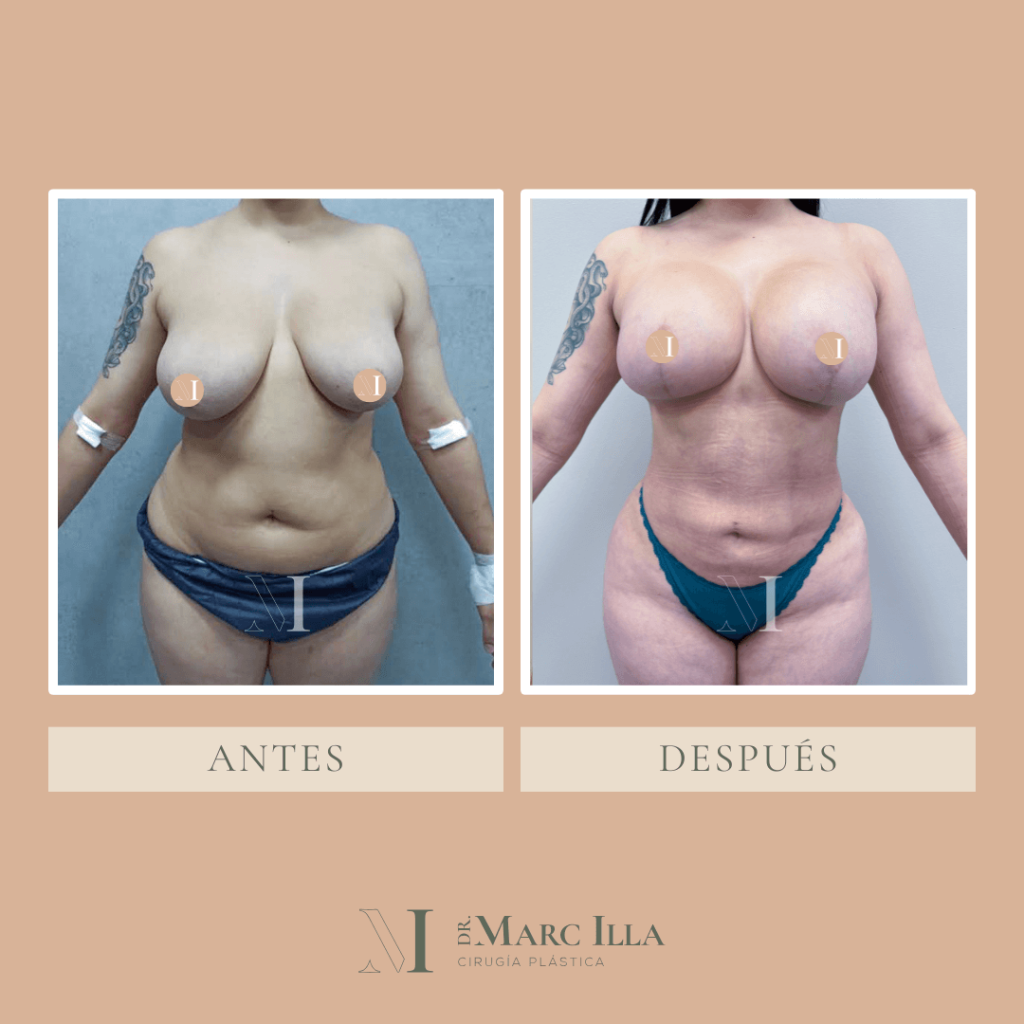
B/A Case 1




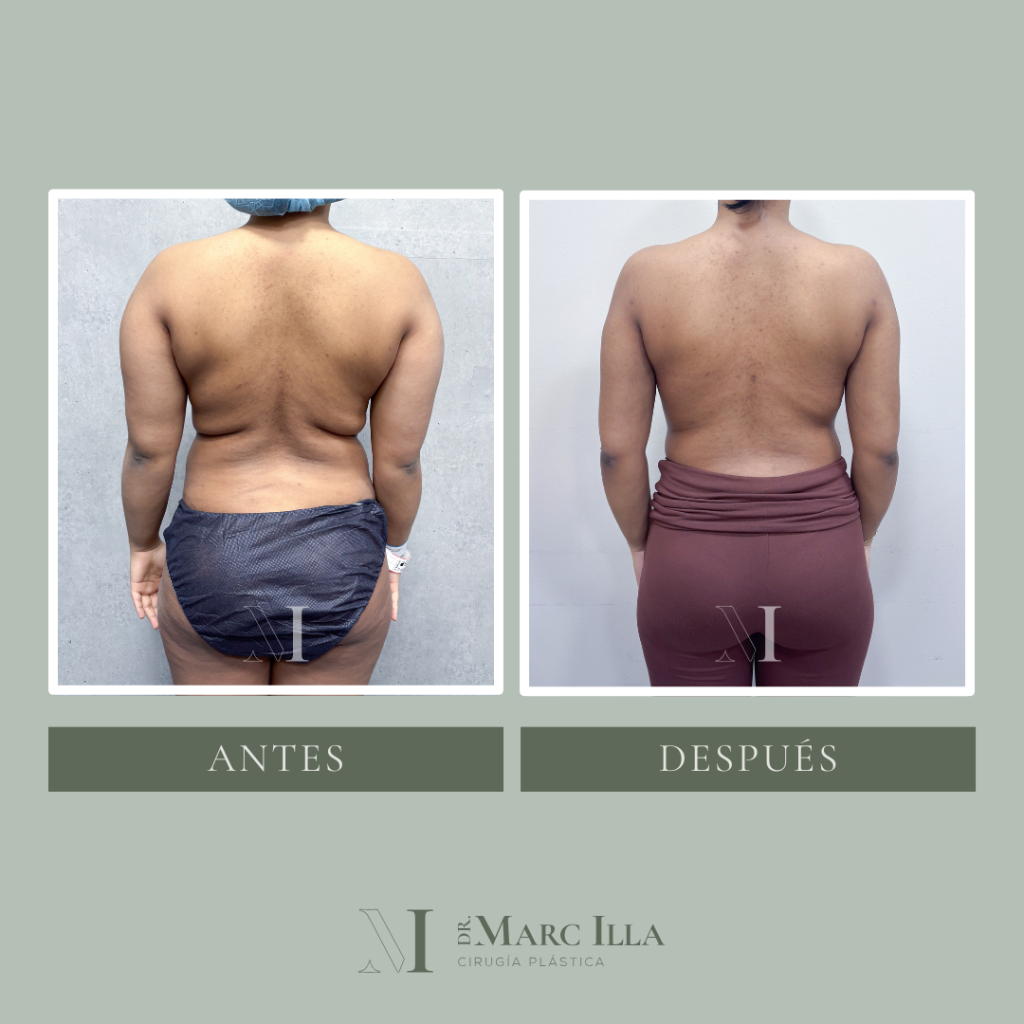
B/A Case 2
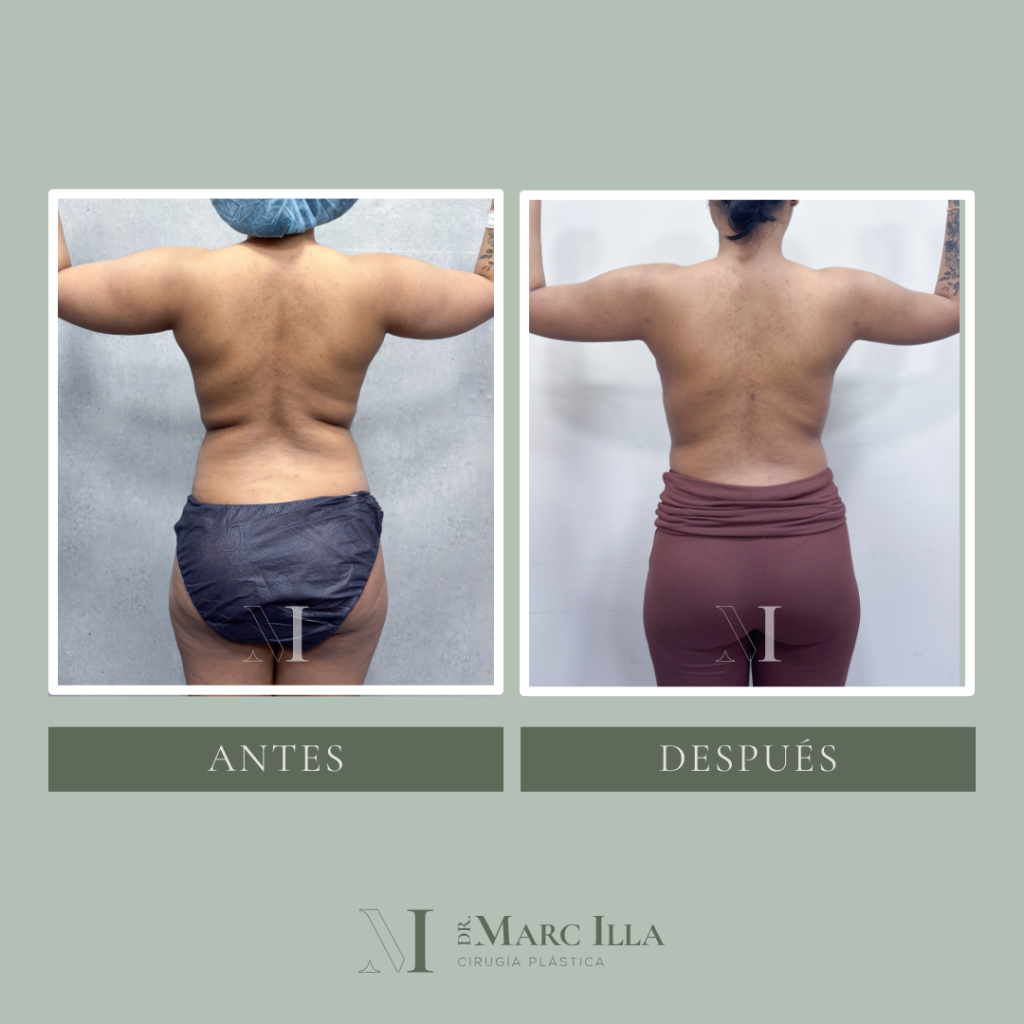
B/A Case 3


B/A Case 4


B/A Case 5
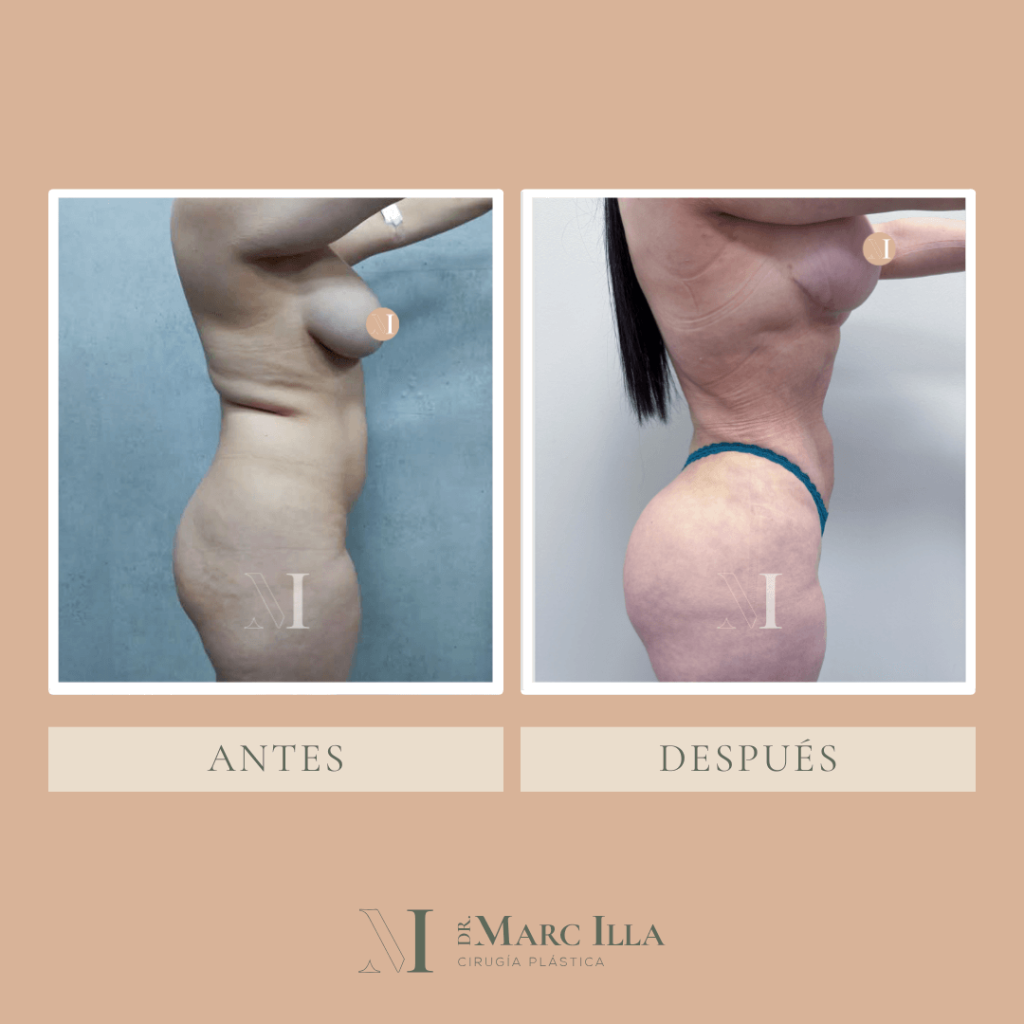
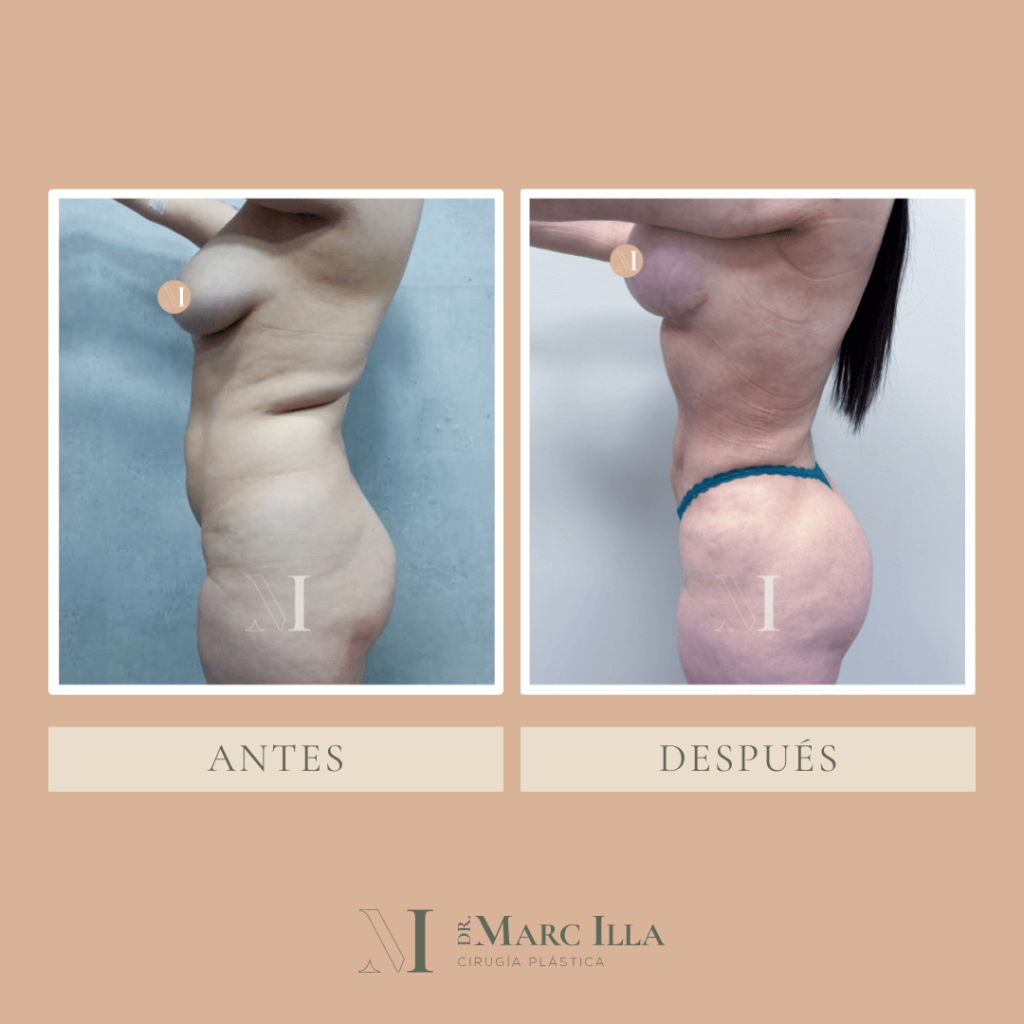
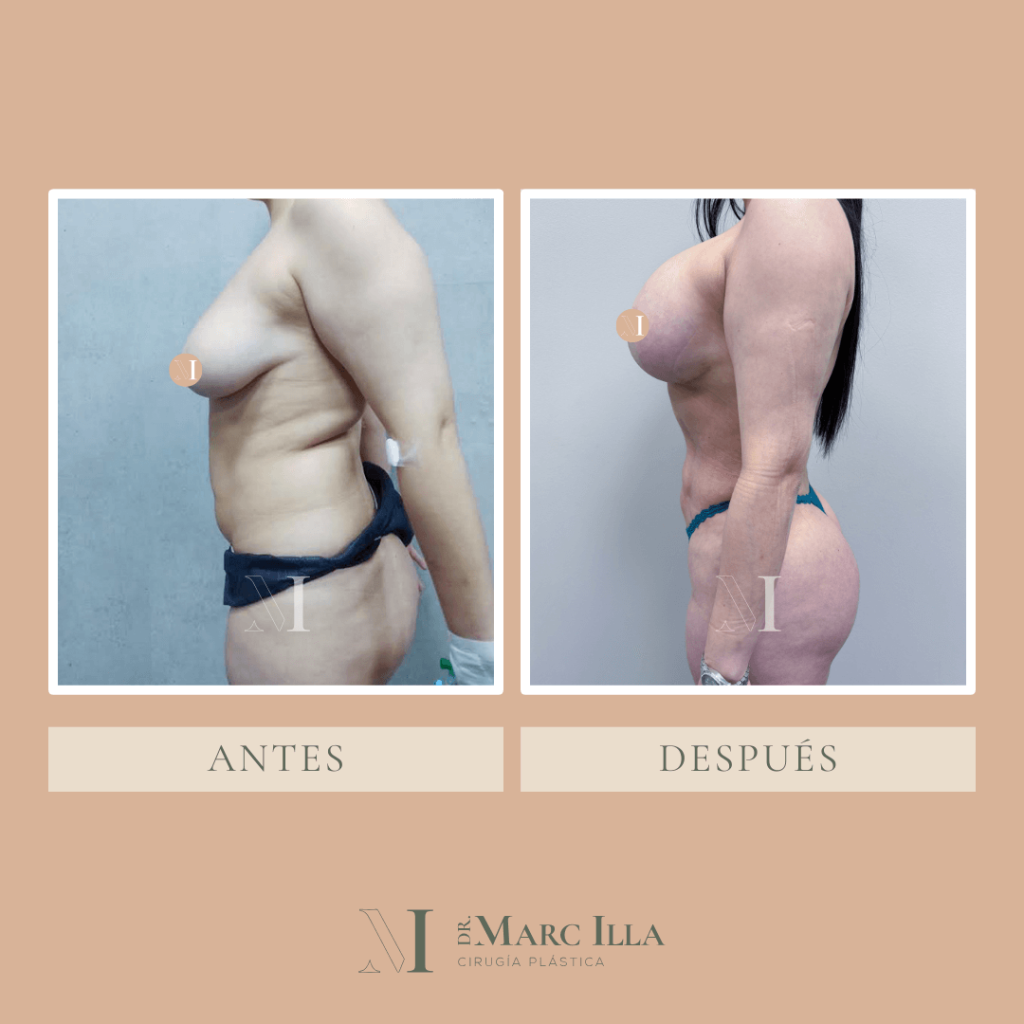
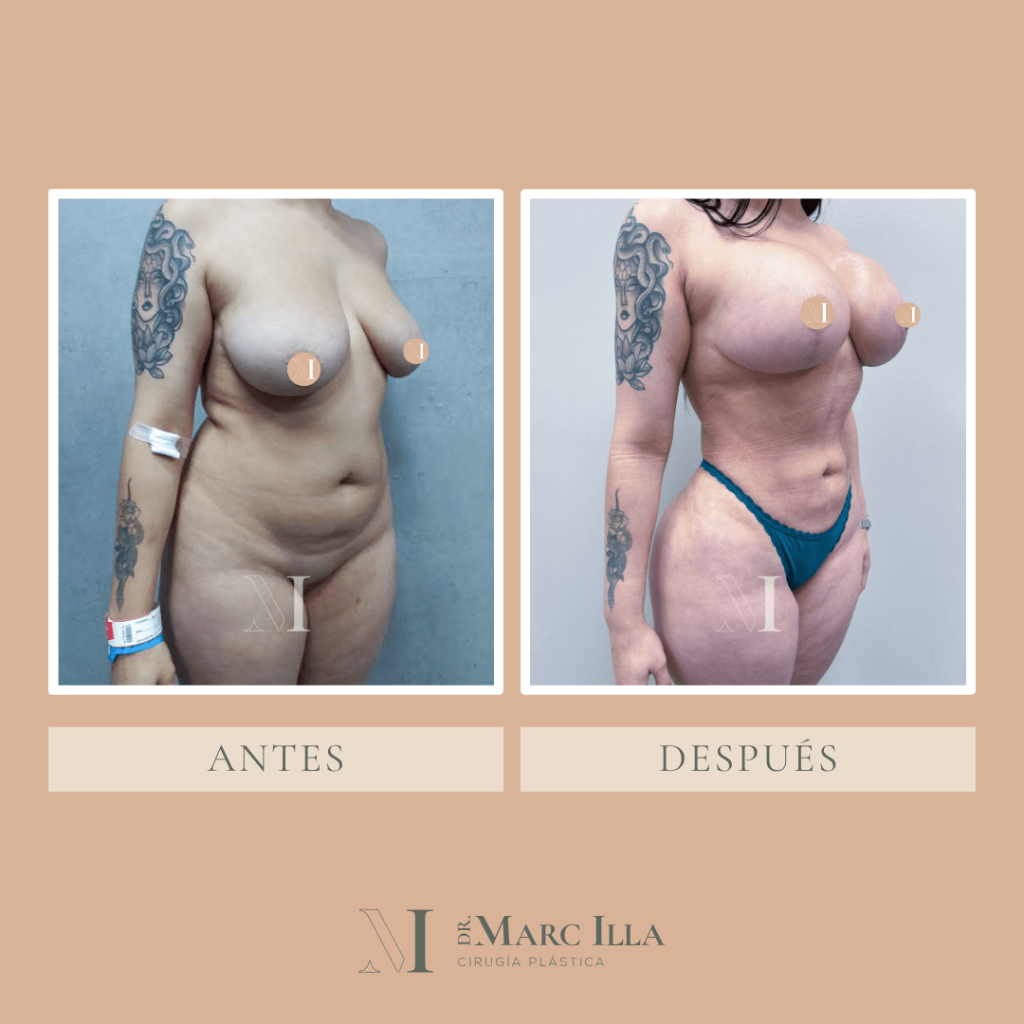
VASER ULTRASOUND, HIGH DEFINITION

“Imagine that fat cells are like a bunch of grapes. The ultrasound makes them vibrate until they fall from the bunch. Then, with the liposuction cannula, these fat cells that have already been detached from their fibers are extracted, as easily as if they were butter. This provides security and makes the postoperative period easier, as it is a much less aggressive procedure.”
Vaser Ultrasound High Definition
It allows us to gain in two key points when performing liposuction:
BODYTITE RADIOFREQUENCY LIPOSUCTION

Bodytite is a novel and effective body remodeling treatment that improves body flaccidity. It works with ablative radiofrequency. It is an energetic stimulation. It transmits energy to the tissues, heating them internally and activating the fibroblasts to form collagen again. This generates tissue retraction, it is as if it created ligaments that did not exist and makes the skin retract towards the muscle. The focus of Bodytite’s work is not fat, but skin flaccidity. It allows the skin of a 40 or 50 year old person to respond to the result of liposuction as if they were 20 years old, that is, generating good retraction and not sagging.
We use it to extract more fat with liposuction and allow the skin retraction that we need. If we didn’t do it, the skin would be flaccid, saggy and wrinkled. We will use it especially on skin that is already flaccid at the base, people over 40-50 years old, and also in areas where we already know that the skin tends to sag after liposuction, such as the skin above the navel, saddlebags, inner thighs, banana roll…
Radiofrequency applied with Bodytite is also the solution for patients who were previously recommended mini abdominoplasties, mini facelifts or mini thigh or arm lifts. Nowadays, we rarely perform these anymore, applying this treatment achieves better results and does not involve surgery with scars.
Marking is a game of light and shadow that consists of highlighting the natural grooves of each person's body. It is about making the most of each person's ligaments and muscles. It can be on the abdomen, the inguinal line or the deltoid. But also the pectoral, the triceps, the thigh or the calves. The lines of the body that generate shadows are marked to highlight the points of light and highlight profiles. The orientation of the different grooves of the body is played with to highlight the natural structures.
“It is not unnatural, it is a surgical marking. The secret is knowing how to do it, marking the groove and its shadow around it. It looks unnatural if it is not done by an expert. For example, in the abdomen we have the linea alba and the sides. In the marking, the linea alba will have shadow on both sides, but the sides only on the outer sides. Each line of the body has a characteristic shape and so does each patient.”
Therefore, marking seeks to define the muscular anatomy. It refines the liposuction lines more and can be combined with procedures such as radiofrequency. However, marking cannot be done on a person who does not take care of themselves.
The abdomen, the inguinal line, the back muscles, the deltoid (shoulder), the pectoral, triceps, thigh and/or the calves.
The marking seeks to define the muscular anatomy characteristic of each patient.
In liposuction we not only reduce the amount of subcutaneous tissue in an area, but we do so in a way that is aesthetically pleasing and respects the natural grooves of the patient's body.
The so-called groove marking (“HD liposuction” or “high definition liposuction”) consists of highlighting those natural grooves that exist anatomically in the body, and doing so in a personalized way for each patient. Not all patients have the same number of grooves on their body and therefore, it is vital to individualize and correctly analyze each case.
In this way we get:
- Highlight the patient's natural anatomy that was hidden among the fat deposits that were resistant to exercise and diet.
- Correct asymmetries in the silhouette.
- Correct disproportions between different anatomical areas of the body, called areas of lipodystrophy.
First of all, it is essential to explain to the plastic surgeon your aesthetic desires and only then will he be able to advise you on the best way to achieve them.
It is advisable, after all plastic surgery procedures, that patients take care of their health, both in diet and exercise and also by reducing or eliminating toxic habits.
Groove marking can be performed in most cases, but its intensity should be moderated if the patient is not going to take care of his or her figure afterwards. Therefore, if groove marking has been performed intensively on a patient who does not take care of his or her health, it may appear visually a bit strange or unnatural.
One of the aspects that sets us apart in liposculpture is the high level of detail, both in the operating room and in the prior study in the consultation.
Comprehensive treatment of the silhouette
When we admire the beauty of a painting, a sculpture, music, or the human body itself, we do not focus on each of its individual components, but rather we observe it in an integral way, as a whole.
When planning a surgical intervention, it is important to take this aspect into account. But how do we apply it in body contouring surgery?
Patients come to the consultation with the initial idea of wanting to improve the appearance of their abdomen, but end up wanting to improve their overall body silhouette. Therefore, it is always advisable to carry out a comprehensive treatment by anatomical areas, not by individual components.
Therefore, in many cases, it is necessary to combine treatments applied to the flanks and even the back, such as liposuction, to achieve the desired result.
We can state without complexes that we have the latest generation methods in terms of body surgery, this makes us different from the rest of body surgery surgeons and also makes us excellent in this type of surgery. The secret lies in using a combination of state-of-the-art techniques and technologies. This allows the intervention to be approached taking into account the patient's silhouette as a whole and not isolated areas.
If you are looking for a clinic to perform body contouring surgery, you have found us. What makes us different is that we never perform an intervention that is reduced to removing fat from a specific area, just like that. The more areas are intervened, the more natural the result.
“If liposuction is only performed below the navel, as the only area treated, it will be discordant with the rest of the belly. That is why we always treat complete anatomical areas.”
Dr. Marc Illa says.
Liposculpture has two concepts. It is a surgical procedure that is formed through two. One is liposuction, which removes fat and creates natural body line markings using a play of light and shadow. The other component is lipofilling or lipoinjection, which allows the obtained fat to be used and placed where we are most interested in as a filler. We always study the best option tailored to the patient.
Liposuction is not a weight loss method. Even the best liposuction is not a weight loss procedure. In reality, it is a procedure to modify the shape of the body. It is intended to remove fat deposits that are resistant to diet and exercise. We are talking about the hated love handles and saddlebags. The fat is aspirated using fine cannulas. Although they are reduced by going on a weight loss diet, they do not disappear completely. With liposuction, a reduction of those specific areas is achieved, which are harmonious with the whole. It can be completed with liposculpture, marking and lipofilling (lipoinjection).
Almost all the liposuction we perform is assisted by ultrasound, with Lipovaser technology (uses VASER ultrasound).
“Imagine that fat cells are like a bunch of grapes. The ultrasound makes them vibrate until they fall from the bunch. Then, with the liposuction cannula, these fat cells that have already been detached from their fibers are extracted, as easily as if they were butter. This provides security and makes the postoperative period easier, as it is a much less aggressive procedure.”
Older liposuction literally ripped fat cells out of the body. This caused a lot of pain, inflammation, bleeding, bruising and worse results.
The fat that is removed does not come back. There are people who have had liposuction and gain weight again. This happens because they accumulate more calories than they expend. This accumulation of new fat will not only be preferential in the area where liposuction was performed. It will be distributed throughout all the fat cells in the rest of the body.
“Even if it gains weight again, it will do so in a more even and homogeneous way, but not concentrated in a specific area.”
We will carry out a specific study that analyses each patient to see where they accumulate the most fat.
Lipofilling (or lipoinjection) is a technique based on using subcutaneous fat from one part of the body and placing it in another. The fat extracted from the patient is cleaned, purified and injected into areas where it is needed. It is part of the liposculpture process.
Ultrasonic liposuction has revolutionized liposculpture. It is a minimally invasive body remodeling technique. The technology we use in this ultrasound-assisted liposuction allows us to selectively emulsify fat cells before their extraction. This allows for optimal control of the procedure and reduces the time of the intervention. In addition, there is also a lower risk of damaging organs with perforations, which is what happened with the documented case of Sara Gómez, the patient who died in Cartagena.
With our technique, since the fat cells are unhooked and emulsified, they can be removed easily and without aggressive procedures. In addition to safety and a better postoperative period, liposuction with VASER ultrasound allows for greater precision. If before, for abdominal marking, it was necessary to scrape the skin until it was completely empty, now it is not necessary to scrape. With the fat cells unhooked, it is much smoother and I can say exactly where I want to remove fat and do it in a homogeneous way.
"For example, if I do a "six-pack", all the lines will be much more even thanks to having previously treated the fatty tissue with VASER ultrasound, and there will be less irregularity," says Dr. Marc illa.
The Bodytite It is a novel and effective body remodeling treatment that improves body flaccidity. It works with ablative radiofrequency. It is an energetic stimulation. It transmits energy to the tissues, heating them internally and activating the fibroblasts to form collagen again. This generates tissue retraction, it is as if it created ligaments that did not exist and makes the skin retract towards the muscle. The focus of Bodytite's work is not fat, but skin flaccidity. It allows the skin of a 40 or 50 year old person to respond to the result of liposuction as if they were 20 years old, that is, generating good retraction and not sagging.
We use it to extract more fat with liposuction and allow the skin retraction that we need. If we didn't do it, the skin would be flaccid, saggy and wrinkled. We will use it especially on skin that is already flaccid at the base, people over 40-50 years old, and also in areas where we already know that the skin tends to sag after liposuction, such as the skin above the navel, saddlebags, inner thighs, banana roll...
Radiofrequency applied with Bodytite is also the solution for patients who were previously recommended mini abdominoplasties, mini facelifts or mini thigh or arm lifts. Nowadays, we rarely perform these anymore, applying this treatment achieves better results and does not involve surgery with scars.
Do you need to eliminate flaccidity from your body?
Frequently Asked Questions
The answer is: IT DEPENDS on each case
- When to decide “NOT to wait to be a mother”: This is the preferred option for patients who do not feel comfortable or identified with the shape and irregularities of their body at the present time. For many patients, for example at 20 years of age, it is not worth spending another 10-15 years (until the age at which they want to be mothers) with a body that they do not feel comfortable with. It is true that the body changes over the years, with sudden weight changes or pregnancies. For this reason, many patients decide not to wait and to intervene on their body at the moment when they do not feel comfortable with it.
- When to decide to “Waiting to be a mother”: This option is recommended for women who only want to undergo surgery once. In this case, it is best to wait until you have had all the children you want before undergoing body surgery. The price to pay will be spending several more years accepting the shape and irregularities present in the body that you are not completely comfortable with.
This type of surgery involves remodelling the fat and, usually, the skin of the body. For this reason, it is common to have alterations in sensitivity that usually last at least for the first 6 months, then they usually recover within 12-18 months.
Good candidates for body surgery may include people who:
- They have specific areas of localized fat that do not respond to diet and exercise.
- They have experienced significant weight loss and have excess sagging skin.
- They have areas of sagging or loose skin due to aging, pregnancy, or loss of skin elasticity.
- They have realistic expectations about the results of the procedure and are motivated to maintain a healthy lifestyle after surgery.
- They are close to their ideal weight and have a stable body mass index (BMI) within a healthy range.
- Do not smoke or are willing to quit smoking before and after surgery, as smoking can negatively affect the healing process.
Postoperative
The first postoperative hours The patient is then taken to the hospital's recovery area, where all vital signs are closely monitored. When the patient has fully recovered from the anaesthetic, the pain and dizziness are under control and she is therefore in optimal condition, she is taken to her room with her family and friends. This is where recovery begins in preparation for returning home.
In your room on the ward, the nursing staff will diligently ensure that the patient is comfortable and with minimal discomfort, using the medication prescribed by our anesthesiology team when necessary. The nursing team will help the patient tolerate the intake of liquids and solids, and walking, thus ensuring a safe return home.
The next day we will come to the hospital to check that the patient is in good general condition and that there are no complications of any kind in the areas that were operated on. We will consider the possibility of removing the drains and bandages. If everything is in good condition, we will proceed to deliver the discharge report, which details all the postoperative instructions that the patient must follow and the prescriptions that she will need to give to the pharmacy in order to receive the medication that we recommend.
In the first week after surgery, pain and dizziness are rare, but there are specific times when they can occur and you have to be prepared.
We have to consider them our allies, since they remove the liquid that causes a lot of inflammation if it stays inside and can even increase the risk of complications. They are a nuisance, but there is nothing worse than that. In many of our interventions we leave them, at least until discharge from the hospital. We always leave them longer in abdominal and back surgery than in breast surgery.
It depends on the type of job. Normally, we allow you to start computer work (secretarial work, IT, telecommunications, etc.) two weeks after surgery. Jobs that involve driving or a lot of movement usually start after three weeks.
We usually allow driving from three weeks postoperatively.
We recommend spending the first five to seven days postoperatively at home, and from then on we allow going out for a coffee or visiting family or friends. Driving or taking long walks from three weeks postoperatively. Sports such as going to the gym or running from four weeks postoperatively. Intense sports such as climbing, swimming, triathlon… from six weeks postoperatively.
Most stitches are subcutaneous or intradermal, that is, they are under the skin, they go inside. We do not normally leave external stitches (only those at the ends of the intradermal suture). If there is a need to leave an external stitch, we normally remove it after 7-15 days.
After liposuction or abdominoplasty, the superficial tissues (skin and fat) are separated from the deep tissues (muscle and fascia). Due to the movement during the postoperative period, these two layers of tissue rub against each other, making healing difficult or causing inadequate healing. To avoid this, we always recommend performing a liposuction.
- Rest for 7-10 days to reduce the amount of tissue friction.
- Orthopedic compression girdle adjusted to the size of each patient for 30-45 days.
The girdle compresses the tissues, preventing friction and movement, facilitating healing in the area of interest. It also reduces edema (inflammation) and postoperative pain, greatly improving patient comfort.